Beginner field notes

Beginner tips for Merge City

This independent beginner guide is for Canadian players exploring Merge City – Decor Mansion by CSCMobi Studios. It offers a calm way to observe the board, follow what the game visibly presents, and make choices at a comfortable pace rather than treating every tap as a race.

Independent review: mergecitymansion is an informational review website, not an official CSCMobi Studios property. Use this page as a companion to what you can currently see in the game.

In your first sessions, notice the available objects, likely merge opportunities, and current task direction before trying to clear everything at once. An orderly board makes later choices easier—make room to see the next choice. The game’s blend of merge puzzles, city renovation, and interior decorating gives those small observations a useful context.

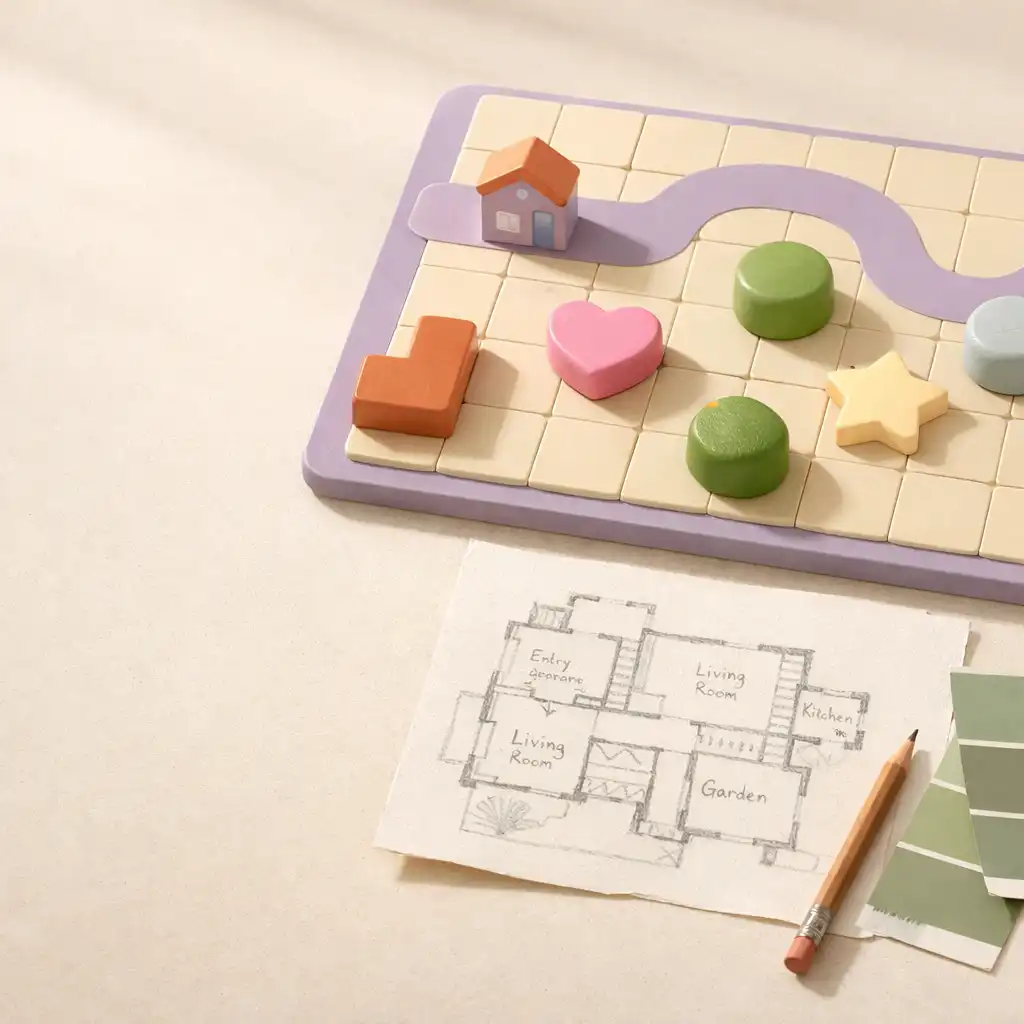
Pastel renovation planning table with generic puzzle tiles, floor-plan paper, paint swatches, and a pencil. A clear worktable is the starting point, not a copy of the game interface.
Before the first merge

A calm start before the first merge

Think of the board as a small workspace. A brief pause before acting helps you understand what is already available and prevents the screen from becoming a blur of hurried decisions.

01

Read the board as a workspace

Scan for similar-looking objects, open spaces, and items that appear relevant to the current task. This is simply a moment to understand what is on screen before you act. When the board is unfamiliar, avoid rapid taps and give yourself time to compare what is visible. A quick visual inventory often makes the next decision feel less mysterious.

02

Follow the visible task direction

Current tasks can work like a helpful compass while you learn the rhythm of merge puzzles, renovation, and decorating. Check what the game is visibly asking for, then consider whether a likely merge supports that shown goal before committing. This does not assume a fixed task sequence; it simply keeps your attention connected to the information presently available.

03

Leave yourself room to notice options

Open board space is a readability habit, not a promise of a particular outcome. Keeping some visual breathing room can make new and existing objects easier to compare. If the board starts to feel crowded, pause rather than forcing another action. Reassessing the layout can be enough to make a task-related option easier to spot.

Board habits

Keep the board readable

Organization does not need to be elaborate. A few repeatable habits can help a new player keep related choices in view while learning from the on-screen context.

Group similar-looking objects before acting

When the interface allows you to arrange what is visible, visual grouping can make potential matches easier to notice. Take a moment to compare appearances before a merge, especially when objects, rewards, coins, stars, or unlockable content are still unfamiliar. The aim is not to name every object family; it is to avoid losing track of related choices in the middle of a busy board.

keep choices visible

Separate active work from uncertain items

Keep objects that seem connected to the current visible task easy to find, while allowing unfamiliar or not-yet-useful items to remain available for a deliberate revisit. An uncertain item is not necessarily unimportant. Check its in-game context before deciding how it fits, rather than assuming it should be used immediately or ignored.

Pause after a useful result

After a merge produces a result, look again before chaining more actions. A changed board may reveal another task-relevant option or show that the workspace needs a little tidying. This is a decision-quality habit, not a reward-maximizing tactic: the short pause protects the calm, readable view that helps you understand the next choice.

“A pause can be part of the play, not a delay from it.”

Merge decision

See the merge decision in plain language

Beginner-friendly merging starts with comparing visible matching or related objects and checking whether the choice suits the current task direction. Use what is shown on the board and in the task area, then give yourself time to understand the result of each action. The point is not to rush through the game’s merge, renovation, and decorating blend, but to make each visible choice easier to read.

“Deliberate observation is a valid way to learn a casual merge-and-renovation game.”

Use a result as new information. If the board changes or a new object appears, pause and reassess the task and available choices before deciding what comes next. See the reset plan when the board feels busy.

Task planning

Let tasks connect the board to the city

Current brief

Treat the current task as a planning brief

A visible task can help a beginner decide which objects or actions deserve attention at that moment. Like a small renovation brief, it gives the board a purpose without demanding that you predict the whole plan. Check the task again after a board change, then let the newest visible context guide your next careful choice.

Notice the restoration context

Task-led progress can connect puzzle activity with the broader appeal of city renovation when that context appears in play. The setting may give you a reason to move from a board decision toward a visible restoration choice. Enjoy that changing context as part of the loop, but do not assume a particular location, stage, or outcome before the game shows it.

Keep decorating choices readable too

Interior decorating is easier to appreciate when you slow down enough to notice what a visible design choice changes. Observation leaves room for personal preference: some players may be drawn to the planning, colour, or furnishing side of the experience. This guide does not assume a catalog depth or permanent choices; it simply encourages attention to the decorating feature that is on screen.

Source-aware notes

Read rewards, coins, stars, and unlocks carefully

Progression terms are most useful when they remain tied to the context currently shown by the game. Treat this sample board as a reminder to read labels, task wording, and on-screen feedback rather than relying on assumptions.

Objects are the choices in front of you

Before making an object part of a broader plan, look for what its visible context suggests. Labels, task direction, and on-screen feedback can help you understand the choice in front of you. This returns you to deliberate organization: notice first, then decide how the object fits the board you can actually see.

Read the context

Rewards deserve a quick context check

When a reward is displayed, notice what it is connected to before assuming it should be used immediately. Details can vary with what is visibly offered in the game. Reading the on-screen wording is more dependable than applying a generalized rule about timing, quantity, or conditions.

Coins and stars: follow the on-screen explanation

Coins

Coins may be a term you encounter. Let the game’s current descriptions explain their meaning and use.

Stars

Stars may also appear in visible progression context. Avoid assuming how they are counted or exchanged.

Source-conscious guidance avoids assigning universal uses to terms whose current presentation may be more specific on screen.

Unlockable content is best approached as discovery

If content becomes available through play, treat it as a reason to revisit the current task and board state rather than a reason to predict what comes next. When a new renovation or decorating context is visible, you can explore it with the same observation-first approach—without assuming rooms, items, milestones, or conditions that have not appeared.
When the board feels busy

A reset plan for a crowded session

Uncertainty is normal when you are learning a new merge game. A short reset can help you return to the visible information instead of pushing ahead on assumptions.

  1. 1

    Stop and scan

    Pause active taps and look for the current task direction, available space, and visible groups of related objects. Keep this first action limited to observation. The goal is to regain a clear view, not to solve the whole board in one glance.

  2. 2

    Make one deliberate next move

    Choose a single visible action that appears connected to the current task or improves workspace clarity. There is no instruction here to select a particular object, and no promise that one move always creates progress. Compare before you combine if you need a refresher.

  3. 3

    Reassess what changed

    Look again after the move and note whether the board, task context, or available choices now seem different. Reassessment can be useful even when a move did not feel productive; it keeps the next decision grounded in what is visible.

  4. 4

    Return to the visible brief

    If the next step remains unclear, return to the game’s displayed task direction rather than relying on unsupported assumptions. mergecitymansion is an independent informational guide, so the game’s own presentation remains the most current immediate context.

First-session rhythm

A gentle first-session rhythm

A sensible beginner rhythm can be simple: look at the available work, make a task-aware choice, then notice the renovation or design moment that gives the puzzle activity a wider purpose.

Look first

Observe the available work

Begin with visible objects, open space, and the current task direction. This phase is observation rather than hurried action, and it brings you back to the board-readability habits that make choices easier to compare.

Choose carefully

Make a task-aware choice

Make one or more deliberate choices that make sense in the context currently displayed by the game. Potential merges are simply visible opportunities. Pause when the board changes instead of assuming there is one optimal way to play.

Notice the change

Notice the renovation or design moment

Take in the city renovation or interior decorating context that gives the merge activity a broader purpose. Some players may enjoy the planning view most. There is no need to predict which visual change follows a task; simply notice what is present.

Guide scope

What this guide can and cannot tell you

Current context

Use the game’s current screens for immediate context

Merge City – Decor Mansion by CSCMobi Studios is the right place to confirm what a visible object, reward, coin, star, task, or unlock means in the moment. On-screen context can be more specific than a general beginner article, and using it can make your next choice feel more grounded and confident.

Official listing

Check the official Google Play listing

To view or install Merge City – Decor Mansion, use the supplied external listing on Google Play. It is this page’s official factual reference for the destination.

Open the Google Play listing ↗

Ready to explore at your own pace

Start with a clear board and one visible brief. Observe what is present, use the current task direction, make deliberate choices, and pause to see what changes. That gentle approach leaves room to enjoy Merge City – Decor Mansion’s mix of merge puzzles, city renovation, and interior decorating.