Merge guide

A calm guide to the merge board

Merge City – Decor Mansion by CSCMobi Studios brings merge puzzles together with city renovation and interior decorating. This plain-language guide focuses on the puzzle layer: noticing identical items, combining them into tools and useful objects, and keeping your next decision readable.

Independent guide. mergecitymansion is an independent Canadian informational review website, not the game’s official site. Use these suggestions as a practical way to understand the loop before or while you play.

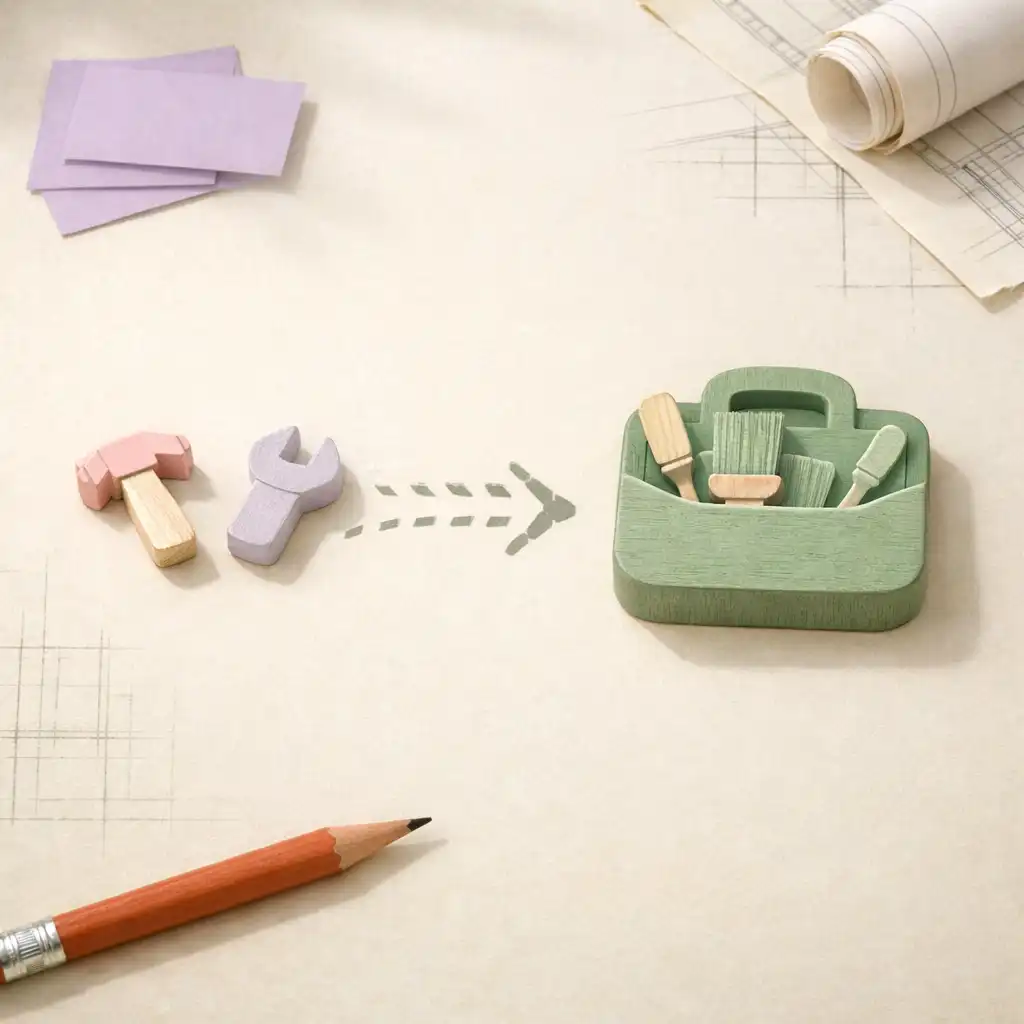
Conceptual worktable with two matching pastel tokens leading toward one larger sage useful-object token.
Planning illustration: matching source items can combine into a more useful result. Labels here are generic examples, not confirmed in-game recipes.
The basic loop

The matching-to-useful loop

The useful mental model is simple: spot a true match, make the merge, then look again. A result is not just a finished action; it changes what is visible and can inform the next task-related choice.

Match first

Start by spotting true matches

Begin by looking for pieces that are genuinely identical, rather than grouping items only by colour, location, or a loose resemblance. When the board is busy, a short visual pause helps you confirm the pair before making a board-changing move. Treat that check as part of the puzzle: clear identification makes later planning easier and leaves you with a better sense of what is still available.

Make the result visible in your plan

Identical items can create tools and useful objects. After a merge, notice what changed and where the new result sits before immediately hunting for another pair. That result may become useful information for your next board decision or for a task you are considering. The point is not to memorise an unlisted chain, but to keep track of the object that has just made your options look different.

“Merge, notice, then reassess” is calmer than treating every visible pair as equally urgent.

Repeat with a purpose, not just momentum

Think of the loop as a series of small choices: identify a match, create a useful result, then reassess the board and current task. That is a personal planning habit, not a rule the game demands. It simply connects the merge-puzzle layer to the wider renovation and decorating context, where a clear next step can feel more useful than a burst of unrelated moves.

Recap: match like with like, notice the useful result, and let the board tell you what deserves attention next.
Board planning

A board that stays readable

Board organisation does not need to be perfect to be helpful. A small amount of deliberate visual order can make it easier to compare likely matches, notice a newly created result, and keep one immediate task in view.

Create a small working zone

Treat one portion of the visible board as a temporary work area for the pair or chain you are currently considering. This is a personal planning technique, not a promised feature. Keeping likely matches close enough to inspect together, where the board allows it, reduces visual noise and makes comparison less tiring.

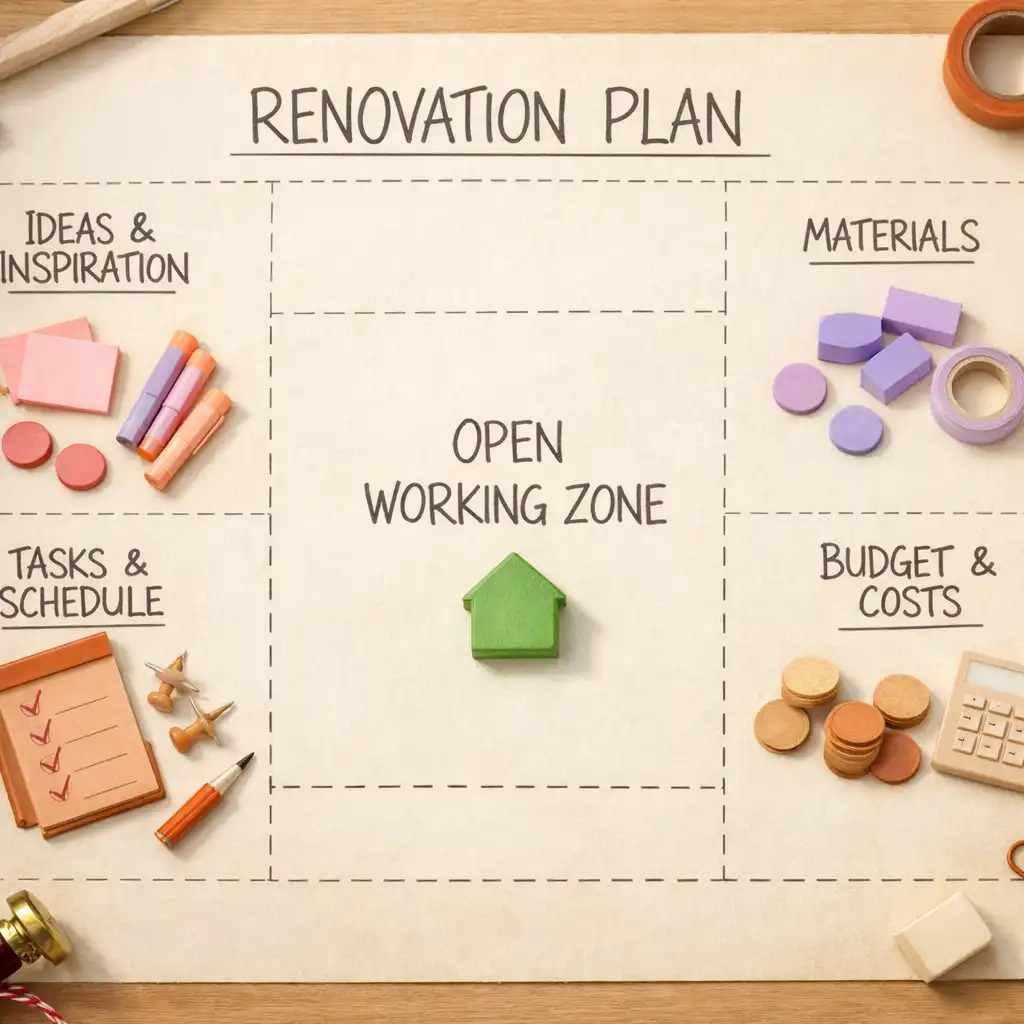
Conceptual top-down paper plan with grouped pastel tokens, an open working zone, and dashed planning boundaries.
Conceptual planning illustration, not a game screenshot. The marked working area is an editorial suggestion for comparing visible items.

Protect open space before it feels urgent

An uncluttered area gives a newly created object somewhere easy to notice and leaves room to compare the next identical pair. Pause after a few merges to notice where the view feels crowded. The aim is not a flawless layout; it is simply to make room for the next decision.

Why it helps: visibility supports calmer choices.

03 / decide next

Group by what you are deciding next

Visual order should serve a current goal, not become a separate chore.

Let attention gather around the immediate task or a suspected merge chain instead of trying to make every item look neatly sorted. A perfect board is unnecessary; adapt the habit to your own pace and to the choice you are trying to make now.

Task-led planning

Follow a task from clue to next merge

A task can be a planning cue when the board contains several possible directions. It does not need to reveal a fixed route to help you narrow the field; it can simply give you a reason to pay closer attention to one useful result over another.

1

Read the task before committing to a chain

Use the current task as a clue for deciding which useful object or line of items deserves attention. This prioritisation method can keep you from creating unrelated results simply because a pair is visible. Keep the wording and context you see in front of you as the guide.

2

Trace backward from the useful object

If a task appears to need a useful object, look for identical items or intermediate results that may help you trace a route toward it. This is a way to think, not a verified recipe map. Item labels and the current board context remain the best evidence for your judgement.

3

Pause once the task direction changes

Completing or advancing a task can be a sensible moment to reassess what the board is showing next. Rather than treating an old plan as fixed, check the visible items again and continue when the next meaningful merge feels clearer.

Check, then continue.

This sequence is a general planning method, not an official item recipe or a statement that every task follows one path.

Decision notes

Merge with less wasted effort

These are light-touch habits for casual play, not an optimisation system. They help keep attention on the decision in front of you when several possibilities compete for the same small area of the board.

Visual check

Confirm the pair before using scarce attention

When several similar pieces are visible, take a deliberate visual check. The value of that pause is not avoiding an assumed penalty; it is maintaining a clear understanding of what remains after the move. This can be especially useful in short, casual sessions.

Current objective

Let the current objective narrow the field

You do not need to pursue every possible pair at once. Choosing the items most connected to the current task can make the board easier to interpret and reduce scattered planning.

Why it helps: one direction is easier to read than many competing possibilities.

Natural pause

Use natural stopping points

Reassess after a meaningful merge, after clearing visual clutter, or when task direction feels less obvious. A short review can make a later session feel less like returning to a confusing board and more like picking up a simple thread.

When it feels busy

When the board feels crowded

A crowded view does not require a complete answer all at once. Reducing the immediate question can restore a sense of sequence.

Stop looking for every answer at once

Choose one visible identical pair or one task-related clue instead of scanning for a complete solution. This is about visual attention, not skill ranking. For a casual player, a smaller question can be easier to act on and easier to revisit after the board changes.

Choose one small sorting pass

  1. Inspect related-looking items without trying to reorganise everything.
  2. Notice possible matches and choose the move that best clarifies the next decision.
  3. Look again after that merge; one clarified result may reveal a more readable situation.

The purpose is to restore sequence, not to create a perfect layout or assume any particular board behaviour.

Task clue

Return to the task clue

When visual organisation alone does not identify a useful direction, revisit the current task. It can provide a practical reason to focus on one potential result rather than another. After the next meaningful merge, reassess again instead of assuming the same plan still applies.

Reduce the question, make one clear choice, then look again.

The wider theme

How merging supports the renovation theme

Puzzle decisions feed a larger restoration mood

Merge City – Decor Mansion combines merge puzzles, city renovation, and interior decorating. That combination gives individual board decisions a broader creative context. A useful object need not feel like an abstract score: it can be understood as part of moving through a restoration-and-design experience, without assuming that any particular object directly changes a named location or room.

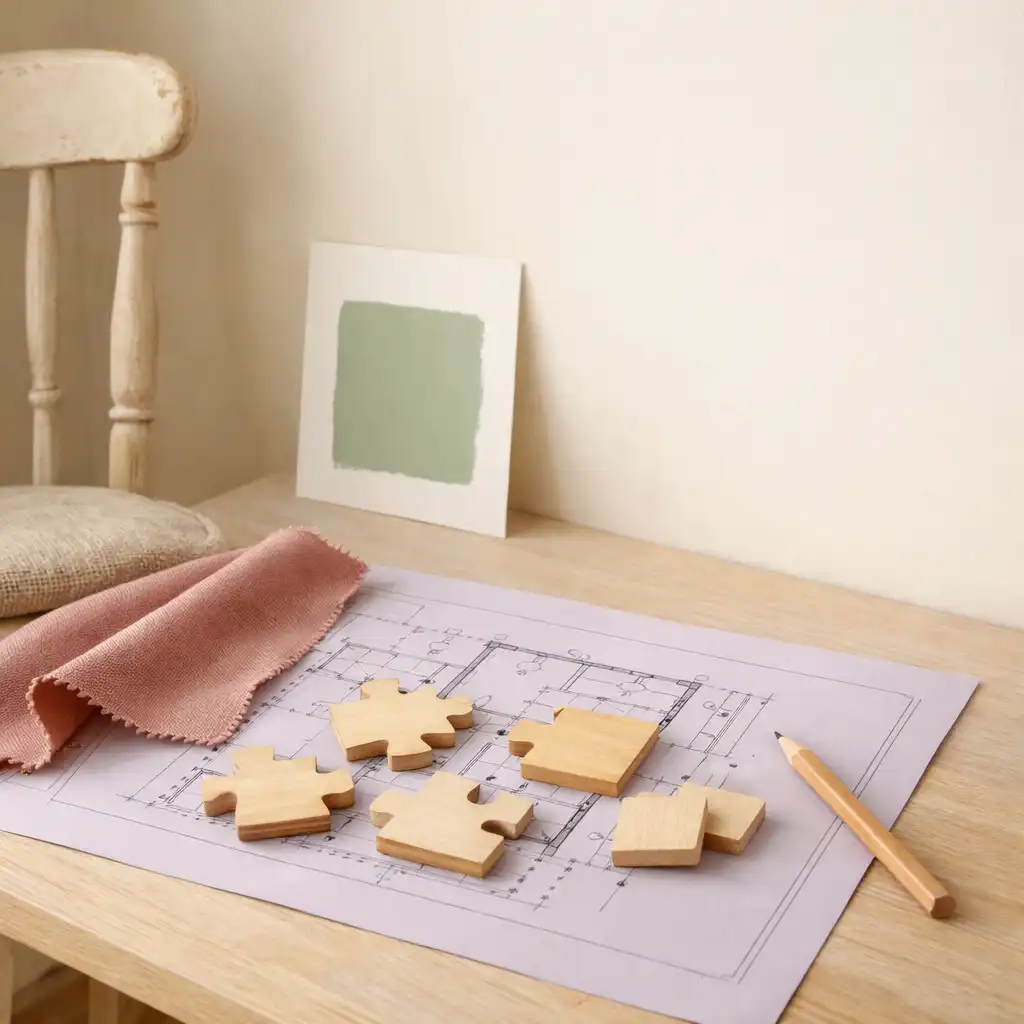
Bright renovation-studio corner with a restored chair, pastel wall samples, a plan sheet, and simple wooden tokens on a worktable.
Editorial still life, not a screenshot or a depiction of a specific in-game setting.
Merge

Keep the board question practical

On the board, attention goes to matching items and useful results. The immediate question is often what can be compared clearly and what direction a task may suggest next.

Design

Keep the transformation question distinct

Renovation and decorating invite interest in the changing look of spaces. They are related to the wider experience, but they are not the same as planning a merge. Explore the City Renovation & Interior Design guide for that visual angle.

Practical takeaway

A calm first-session routine

Use this repeatable sequence for your first few decisions, then adapt it to your own pace. It is not an official recommendation or an optimal route—just a compact way to make the board feel easier to read.

  1. 1

    Look for a clearly identical pair

    Start with the simplest actionable observation: identify a pair that visibly matches before trying to interpret the whole board. You do not need to assume every session begins the same way; you only need one clear comparison to begin.

    Why it helps: it turns a busy view into one manageable choice.

  2. 2

    Merge, then notice the result

    See the newly created tool or useful object as new information, not merely as a completed action. Notice where it appears and what it changes in the immediate view before you decide which pair deserves attention next.

    Why it helps: a result can clarify the next decision.

  3. 3

    Check the task direction

    Use the current task as a practical cue for deciding which potential result deserves attention next. Generic task direction can narrow the field without requiring you to assume task rules, rewards, or one fixed route.

    Why it helps: a task can give your next comparison a reason.

  4. 4

    Leave the board easier to read

    Pause once the next move is clearer, keeping open space and visual order in mind for later decisions. This is a personal habit rather than a requirement, and it connects directly to the recovery approach for a crowded board.

    End with a clearer next question than the one you started with.

Independent source note

Guide boundaries and source note

What this guide is based on

This site uses the official Google Play listing for Merge City – Decor Mansion by CSCMobi Studios as its factual source for the game identity and broad description. The board-planning suggestions on this page are independent explanatory advice. For live details, consult the current official Google Play listing ↗ and the game itself.

What is intentionally not claimed

We do not assign exact recipes, item names, task requirements, rewards, release details, ratings, or availability claims that are not established here. mergecitymansion is independent and not official. Observe current in-game labels and the official listing when you need details beyond this practical walkthrough.

Official destination

Ready to see the current listing?

To view current app information or install Merge City – Decor Mansion by CSCMobi Studios, use the official Google Play listing. mergecitymansion remains an independent guide, so the listing is the appropriate place to check the latest details about the app.

View on Google Play

Independent guide; external link to the official Google Play listing.